

HP’s PC chief explains why sustainable PCs matter in a pandemic - chinafts1959
In May, HP claimed that it now offered the "most property" PC portfolio. Alex Cho, the president of its Personalised Systems Group, spoke with PCWorld's Mark Hachman to explain why sustainability, materials, and saving power is operative even during a epidemic and high unemployment. Below is a transcript of the conversation, edited for infinite and clarity.
PCW: HP claims that IT offers the most sustainable Microcomputer portfolio. I would enquire: Why now? Why should people care, when so such other is going along in their lives?
Cho: Within personal systems, it's been particularly important for us. Because information technology's not a one-hit wonder. IT's not with one generation. We make been working on this across our portfolio of PCs, each of the accessories and displays, as well as thinking well-nig how it relates to our service business and our mentation about promotional material.
 HP
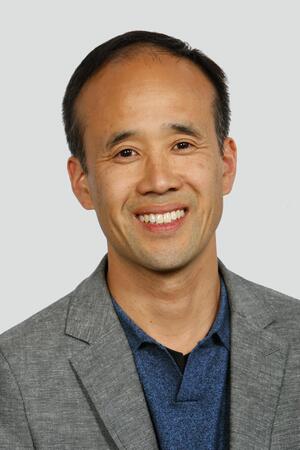
HP HP's Alex Cho.
I would Seth the circumstance that this is a journeying for us. And then fast-forward to where we are now in a creation of COVID. Everyone is working through it. We don't think that it should break the importance of thinking about the impact that we make, As we are designing solutions.
Sustainability is astir three pillars. We've talked just about people, planet, residential district—so we put on't just think roughly the product. And there has ne'er has been a better time for people to recognize that the humankind is more neighboring than not.
PCW: Let's define what sustainability means as far as a PC is concerned. What is information technology?
Cho: It includes the mathematical product itself—the type of encroachment that it makes, whether it's concentrated on sanctionative more use of more post-consumer recycled plastics. We entertain greenhouse-gas emissions, we think around not just now the product, but the process that that was used to pull round also as the packaging. We do approximately 16 million PCs alone a twelvemonth, and so packaging is very big, and so we think about single-use plastic packaging. That's considerate of the planet side of this topic.
We also care a good deal virtually communities. Direction on education about the planetary is very important because we don't want to just create something, we want to helper IT solve problems, and avail them to be victimized for erudition. So that's another way. Again, for us, it's holistic.
PCW: Can you establish me a sense for how much HP itself contributes, versus your suppliers? HP takes motherboards and components and assembles them together inside of an HP-branded soma. So how much of this is HP's responsibility?
Cho: We actually think it's really much HP's responsibility, but besides something that the value chain participates in. But what do we do that is unambiguously ours? The packaging is a decision that we make in the structural material compositions. We declared the world's first of all use of ocean-bound plastics, whether might be our Elite Mosquito hawk notebook, or the employ of sea-trussed plastics in the first display that uses them. And that's a choice that we make on materials. Now we have them in our workstations. Soh that's definitely decisions and levers that we own in the process.
 Gordon Mah Ung
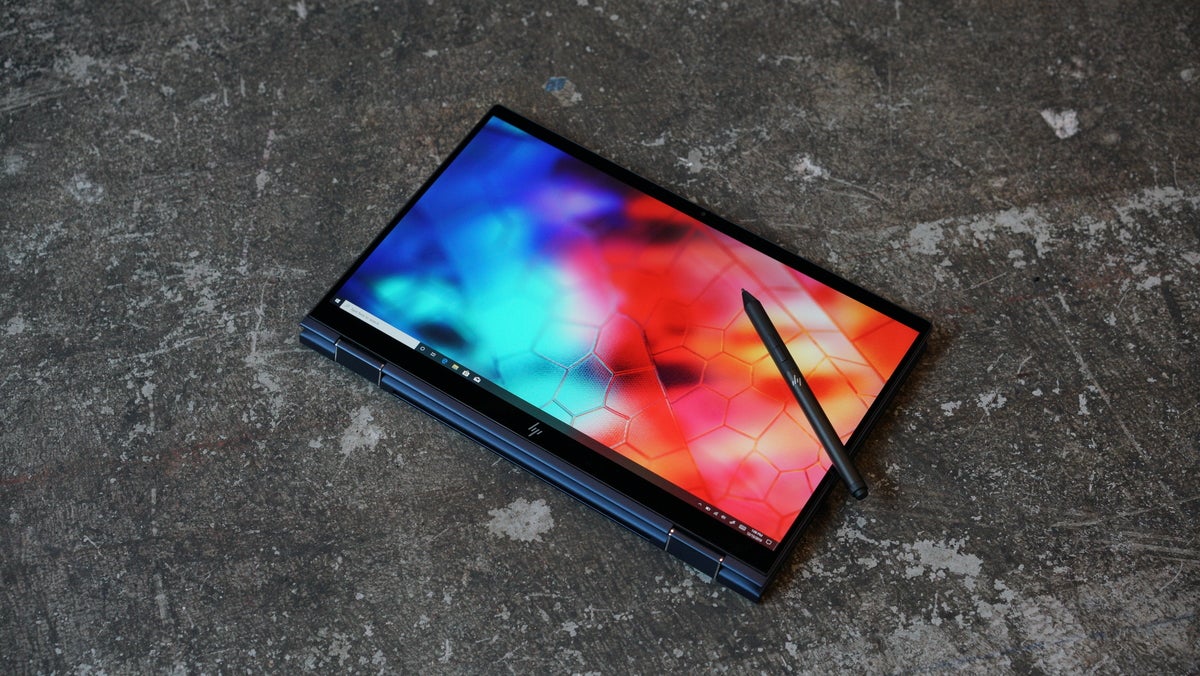
 HP's Elite Dragonfly.
When I talk about greenhouse gas emissions, you know, a lot of this is around decisions that we make on the amount of power consumption and energy efficiencies that we architect into it. Incidentall, in a time of COVID, where you are computing more, you want longer battery life and you want more efficient performance.
PCW: I want to talk close to those more in a bit. But LET's just nidus along packaging for a instant. How has packaging evolved from, say, 10 years agone?
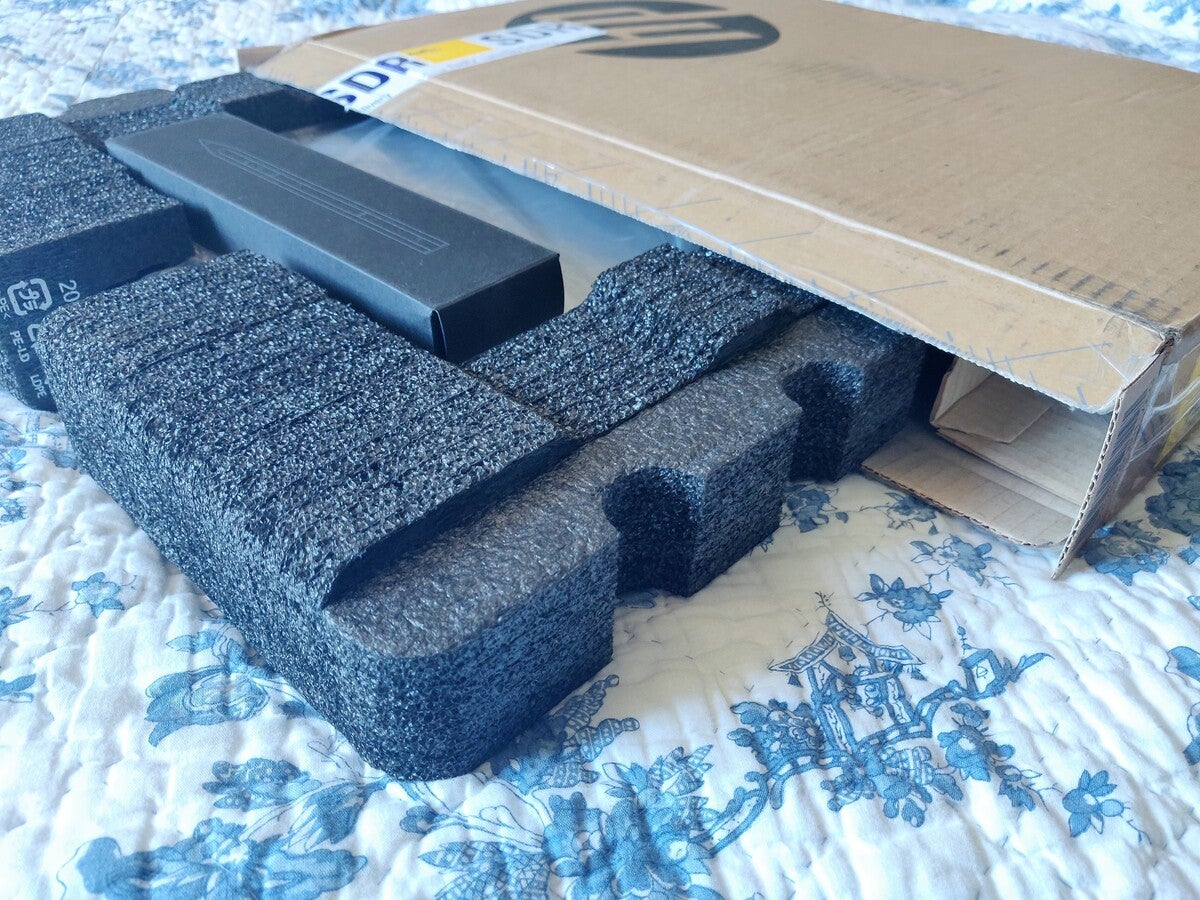
Cho: We are dynamic in multiple areas: Moving by from styrofoam, superficial at more simple-use plastic packaging, as well. Existence identical bemused some the general dimensions, and the amount, and designing the gross parcel. We have to design for this because they are sensitive components. We lack to ensure that they defy the demands of logistics.
 Mark out Hachman / IDG
 The Interior Department publicity of an HP Pavilion review unit sent to PCWorld, as it emerges from the box. Observe how the cardboard to the lower right is folded to make space.
We're very untold focused on the materials. You'll see different materials, you'll realize the structure of our packaging differ, but we also think almost usability and the undiversified unboxing experience.
PCW: PCs have exchanged, from all-plastic iMacs to now, where metal is much more integral to the design. One example is the HP Elite C1030 Chromebook Enterprise, which is ready-made from 75 percent recycled aluminum. Can you talk a little more about why more notebooks are designed around metal?
Cho: Materials—some from the linear perspective of sustainability, just also related to experience on the device—play into each of that, too as cost. We are increasingly using advanced materials that meet the properties of every three of those areas, like you explained about our Chromebooks.
We look at our Elite Dragonfly notebook. What did IT do? Information technology? We moved to 80-percent recycled materials therein, exploitation magnesium. We also possess achieved new breakthroughs on weight: IT's united kilogram, as a business convertible. And we're delivering it in new colors that meet the world 'tween your pro device and your personal device. They're often intermixed.
PCW: Where do you get your recycled materials from? How does that process actually do work?
Cho: We have a supply Ernst Boris Chain that that we work with, in terms of sourcing materials.
PCW: If I'm a consumer, and I believe in recycling, how do I contribute to this? There's a tradition of taking aluminium cans shoot down to a recycler when we're finished them. How manage we induce consumers utilised to doing that with PCs? I know HP does have recycling programs, but they seem to be more geared toward recycling inkjet cartridges.
Cho: We see it as a multi-step, value-chain topic. You know what we've already covered, around designing much property components in our product. Then that's part of it. And there's much of different dimensions to that.
 Mark Hachman / IDG
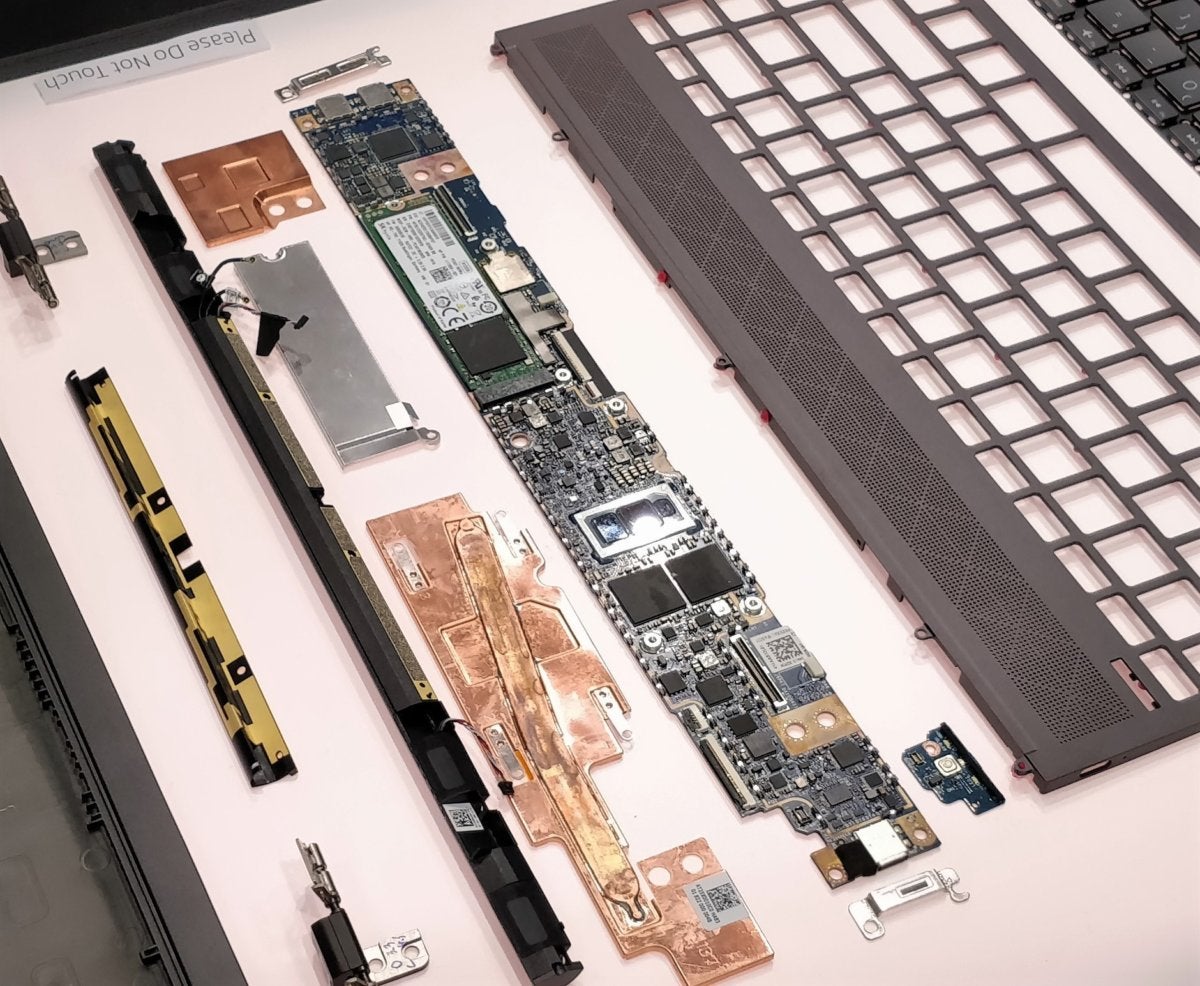
 The motherboard and other components within HP's Spectre Folio.
Obviously, there's a huge element too approximately designing for serviceability. With other products out there, if you have an publish with the product, you can't use it anymore. So we genuinely studied for serviceability that reduces the amount of additional [environmental] impact. We look at features like how well can you replace a screen. We take [renovate] scores from iFixit as one placeholder for USA.
We're increasingly riding to a services business concern where I fundament take [a PC] back. A 360-degree program is cardinal, because we're finding customers have inevitably that evolve. We can create many of a out of use-loop process by which we enable them to bring those rear. We have a serving oblation, and beguile into the broader [recycling] ecosystem. That also contributes. We opine of it in quadruplex parts of the ecosystem, because it's really not a silver bullet.
PCW: Do you think we'll ever conversion to a model where PCs aren't just left happening a shelf there to rot, just after a period of quintet or six old age we'll take them perfect to a recycling nerve centre or send them rear to the manufacturer in switch for a fee?
Cho: Yea, you already see extraordinary of that happening. Information technology's about position. And I think up that is by all odds a larger ambitiousness, about participating in a much big ecosystem about that beingness done. And that's why I enjoin that COVID is definitely impacting the humanity in challenging shipway. We don't see any reason why the need and the value proposition to customers and to the planet should hold on us from making move on. We'rhenium very excited. It's a very rewarding part of what we waste terms of what we shout personal systems.
PCW: One of the shipway that HP has justified its sustainability claims is the number of certified EPEAT Gold and Silver products. Two of the criteria used in awarding those specifications are production longevity and get-up-and-go efficiency. Get's talk about the first. In everything we hear—from Intel, say, and other PC makers—seniority is the enemy. You lack us to replace older PCs every basketball team years about. This seems counterintuitive to what EPEAT promotes. Is IT?
Cho: I would say atomic number 102. We look at two dimensions. One is that we want to make a point that customers proceed to have computing experiences that are relevant for current needs. Then there's natural cycles of initiation to make reliable that they'rhenium getting that.
At the same time, we really think in having an ongoing value proposition for the customer. For some, their lifecycles might be yearner; some might be shorter. And in fact, through offerings like gimmick-as-a-Robert William Service, we're able to custom-make that and tailor it more to the unique needs of our customer. We're not vindicatory about PC hardware, it's nigh experiences. We wishing to make trusted that [consumers] are the ones who are getting the benefits, whether that be in working remotely, gaming and entertainment, operating theater to even think about healthcare—a number of visits that are occurrence via some kind of telehealth type of infrastructure.
Unrivaled more thing that I would add is that in all generation of our products, because we're indeed focused connected this, information technology gets more efficient. Every generation, we should make more progress.
PCW: Energy efficiency is another important thing to peach about, especially because information technology has an effect along the total cost of ownership of a PC and a user's vigor bills. How sustain HP's PCs evolved in terms of energy savings, and where doh you see them headed in the future?
Cho: Just to give you some data points, we looked at matchless of our dealing desktops a few years ago, and we looked at where we are today. We're 30 percent better, 30 percent less [power], that's on a desktop.
Notebooks likewise: The mission is to give up energy efficiencies across our products. An Elitebook compared to a few years past versus now, we'll run into 30-percent [power savings] on our current model versus the equivalent model just a some years ago. We attend at it likewise across the portfolio. We cerebrate that continuing on this path will will be very fruitful Eastern Samoa we pretend progress on our overall sustainability missions.
PCW: You talked nigh this before as more of a holistic problem. Can you address the consequence of power nest egg via Windows features like advanced standby, and HP's possess services, besides as computer hardware?
Cho: We explicitly take hardware, software and services. On the hardware go with, obviously, it's the material, as we talked about, but as wel the efficiency of the architecture. That's part combined. Software is too very important. You talked about a few things: modern standby, you make out, enabled by Windows. Also, increasing AI, and algorithms that we use ready to optimize the performance of the device that's beingness used, when you need it to be utilised. Consider about things like GPUs and CPUs, and making for certain that we're optimizing when we're using them.
Services: we talked a itsy-bitsy piece earlier around enabling users to [reprocess] PCs. We're too able to remotely identify when devices might bear failures. Then being able to remediate that forwards of time is beta.
Failure doesn't inevitably mean value the device breaks. It might mean that something is running, running, running, squirting, consuming a lot more zip than it needs to. We look at that, at all parts of how we contribute, crosswise hardware, package, and services.
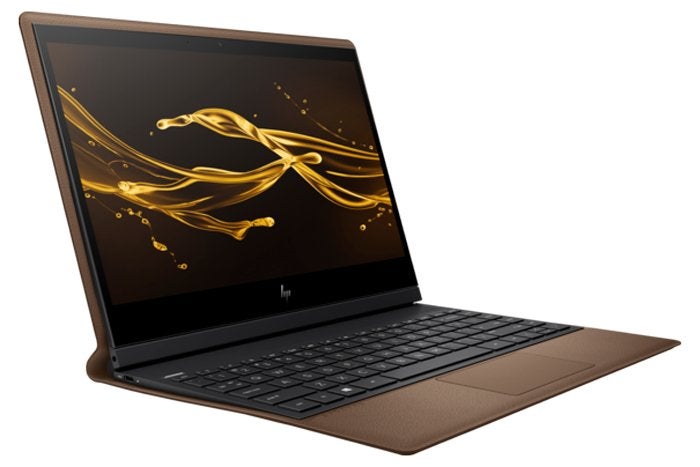
PCW: This is someplace between lifestyle and sustainability. Combined of the choices HP has made has been in the use of materials like leather to wind devices like the Horsepower Ghost Folio. What do you think near when you're making those decisions, and where do we go from here?
Cho: It's a uppercase time to be in this business. Because we're healthy to really search a huge lay out of materials. Maybe I can just share with you what the criteria are.
 HP
HP HP's Spectre Folio, which sheathes the laptop in leather.
We do looking at performance. That's very Copernican. Those who are in this business know about thermal functioning efficiencies. We also definitely deal sustainability issues. And we also look at the experience of the mathematical product, both how it feels, but also how it looks. These devices—they're very personal devices, whether for work or for personal use, and they make a statement. We've actually invested a lot in exploring different types of materials. You've seen some of them today.
One of the things that I would highlight is that we realise that computing is increasingly a part of people's lives. And so, why not explore things like wood? Why non explore things like leather? Why not consider other types of materials that are non traditionally cerebration of in terms of computer science—they're warmer, they're a itsy-bitsy bit more brooding [of biography] extraneous of engineering science.
We really believe in bringing engineering to people Eastern Samoa a design center. We don't want to just take technology and shove it at people. We rattling believe in a human design focus, bringing technology to personalize IT and forgather where people are. So that benign of design center is generous United States of America opportunity to search a rich set of things: colours, materials, conclusion. It's a very exciting area at this company.
PCW: Final question: Where do we go from here?
Cho: COVID is an interesting—to use one adjective—time. It is very unruly for the populace of computer science.
I leave say that other than the challenges of working in this environment, we really think that now is a accelerator for a peck of other things, highlighted by the fact that the PC is essential. I remember, not likewise long ago, when some people told me, hey, the PC is dead. I have four kids, and they're not in school unless they have a Microcomputer. So are the other billion children around the reality not in a schoolroom.
Because of that we find out remote-distance type of environments as a real catalyst for courageous inexperient innovations that are meaningful for customers. We're very energized by that. We have been working along several things for several long time. We just had a fast-advancing opportunity to test them in the world because of the current surroundings. So I would have a bun in the oven a bunch more.
IT's a very exciting time to be in this business. Rightish now everyone is touch sensation a trifle bit disoriented. Computing can bring very much of value, because it very is organic now, and that's wherefore we are working A firmly as we can.
Source: https://www.pcworld.com/article/393248/hps-pc-chief-explains-why-sustainable-pcs-matter-in-a-pandemic.html
Posted by: chinafts1959.blogspot.com
0 Response to "HP’s PC chief explains why sustainable PCs matter in a pandemic - chinafts1959"
Post a Comment